
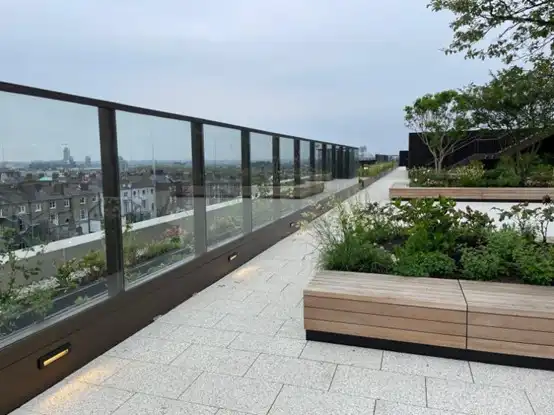
Building Ireland from the Ground Up: The Unseen Role of Engineered Soils in Major Construction Projects
Across Ireland, a growing number of large construction and civil engineering projects are placing soil performance, stormwater management and ecological resilience at the centre of their design. Behind the structures, plazas, housing schemes and green infrastructure systems that define modern Irish development, the soil beneath is increasingly engineered with precision. As landscapes become more technically demanding, the role of high-quality substrate blends, bioretention soils, tree soils, paving system mixes, wildflower soils, and green roof systems has never been more critical.
At Enrich Environmental, we work every day at the intersection of construction, ecology, and soil science. While many people recognise our compost, topsoil, and horticultural products, fewer are aware of the extent to which Enrich soils support some of the largest infrastructure and landscape projects in the country. From large residential schemes to city centre public works, sports facilities and green roof installations, our engineered soils are used widely within the construction sector, with our involvement often behind the scenes.
This article explores the growing importance of engineered soils in Ireland’s built environment, the technical considerations that guide their application, and the partnerships that ensure successful delivery at scale.
Engineered Soils and Modern Construction Standards
Modern development demands more from soil than ever before. Rooftop spaces must support vegetation with minimal loading weight. Tree pits in dense urban environments require structural support while maintaining biological health. SuDS features must absorb, filter, and detain stormwater. Civil contractors and landscape architects now depend on engineered blends that meet specific functional roles.
Enrich manufactures a wide range of substrate types that mirror these requirements. Lightweight green roof soils, urban tree sands, structured tree soils, bioretention media and engineered sandy loams are all produced to meet the functional expectations of planners, engineers and landscape architects. Our blends are designed with drainage, porosity, bulk density, root development and nutrient availability in mind and are aligned with standards such as BS 3882, IS 441, FLL, Ciria, and BS 8616.
This precision manufacturing supports the reliable establishment of vegetation in challenging environments, helping designers meet engineering and ecological performance targets simultaneously.
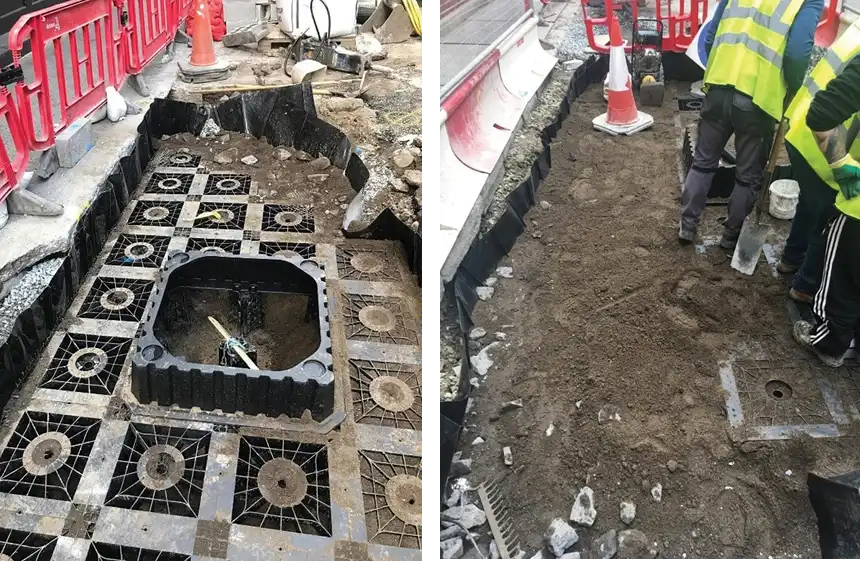
Supporting Ireland’s Largest Contractors
Many of Ireland’s leading construction and landscaping companies use Enrich soils as the foundation for their work. These partnerships are built on trust, quality control and technical collaboration.
Companies such as John Paul Construction, Walls Construction, Cairn Homes, SAP Landscapes, O’Brien Landscaping, Shannon Valley, Hegarty Construction, Contech, Maylim and others regularly engage Enrich for large landscape and civil engineering projects. Waterproofing and roofing specialists, including IKO, Moy Materials, Soprema, and Contech, specify Enrich lightweight green roof substrates for extensive, intensive, and biodiverse roof systems across commercial and residential buildings. Leading design houses such as BSM, ÁIT, CSR, DFLA and other environmental consultancies frequently collaborate with us to align specification requirements with ecological functionality.
These organisations operate at the highest standards of engineering and environmental compliance. Their repeated selection of Enrich soils is a strong endorsement of the reliability of our products and our ability to deliver consistent volumes at construction scale.
Examples of Major Project Applications
Across Ireland, Enrich soils are used in a variety of infrastructure and landscape applications. These include public realm redevelopments, transport hubs, housing schemes, university campuses, business parks, sports facilities, and high-rise commercial projects.
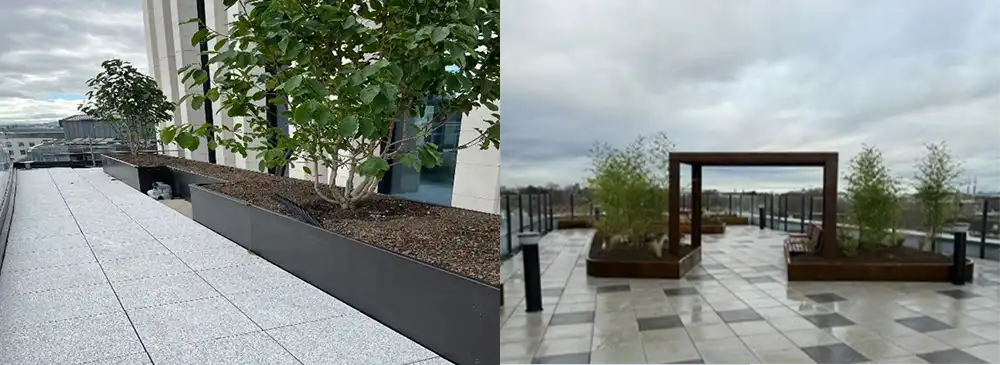
In large urban centres, Enrich green roof substrates support biodiverse roof spaces that contribute to stormwater attenuation and urban cooling. These roofs are installed by contractors working with IKO, Moy Materials, Soprema, and Contech for major city projects.
Residential developments delivered by companies such as Cairn Homes, Shannon Valley and Walls Construction often incorporate structural tree soils, bioretention soils and podium level planting substrates. These materials enable the successful establishment of street trees, mini parks, and communal green areas within dense housing schemes.
In commercial and civic developments, Enrich soils are used extensively by SAP Landscapes and O’Brien Landscaping to deliver courtyards, amenity lawns and SuDS installations. Projects of this scale typically require consistent large-volume soil deliveries, rigorous quality assurance and close coordination with engineering teams.
Sports facilities and public campuses also rely on engineered sandy loam blends, turf soils and drainage materials. Contractors use Enrich materials to meet the high-performance requirements of athletic and recreational landscapes.
These projects represent only a fraction of where Enrich soils are used. While our work often supports larger, highly visible contractors, our products perform quietly beneath the surface, enabling landscapes to function as intended.
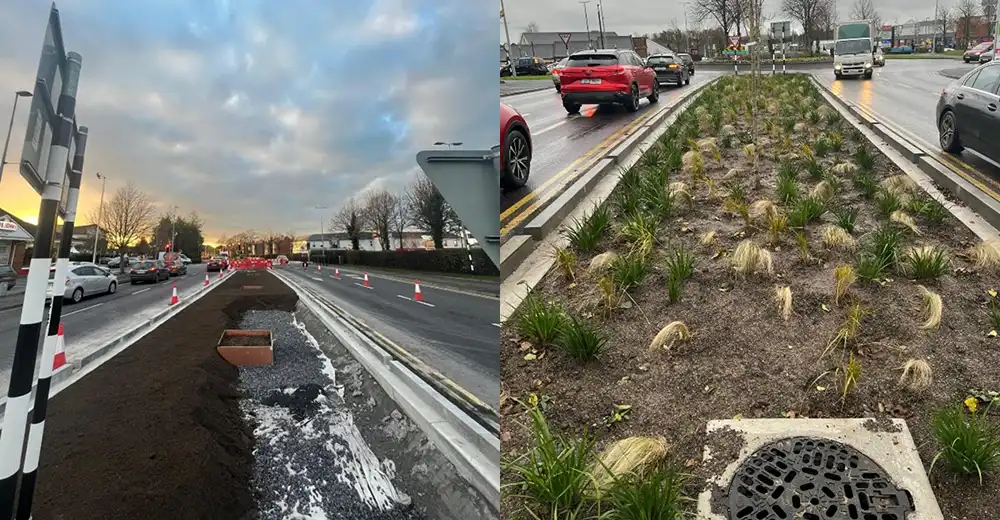
Soil as a Technical Material
Engineered soils are increasingly treated not as simple bulk materials but as technical components of construction. Their performance influences stormwater behaviour, structural stability, root development, biodiversity potential and long-term landscape success.
For example, bioretention and SuDS soils must balance infiltration, storage, and pollutant filtration. Green roof substrates must remain lightweight while retaining moisture and supporting vegetation under shallow conditions. Structural soils must support hardscape loads without compromising the tree rooting environment. Urban tree sands must enable oxygen exchange under compacted conditions.
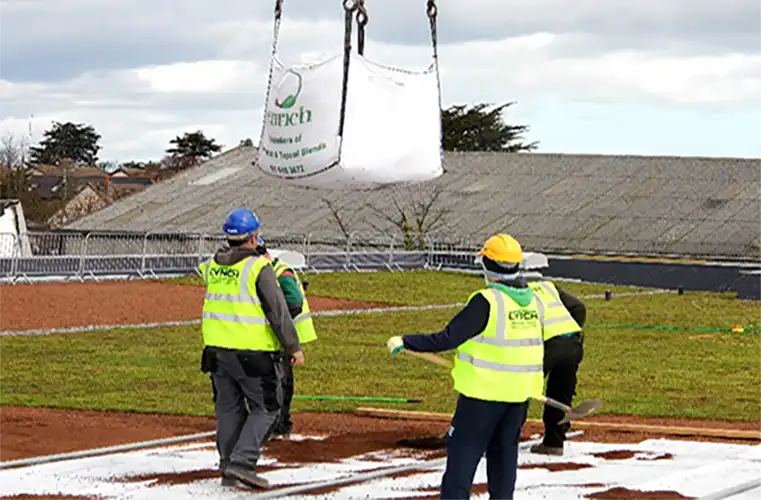
Every project type has its own requirements. Soil properties such as texture, organic matter, compaction tolerance, saturated hydraulic conductivity, pore space distribution and drainage dynamics must be carefully managed. These are not incidental details but fundamental design considerations that determine whether a landscape thrives or fails.
Collaboration from Specification to Delivery
A major reason contractors and design teams choose Enrich is the collaborative approach that underpins our soil manufacturing. We regularly work with civil engineers, environmental consultants, architects, landscape architects and site managers to ensure the correct soil is specified and delivered.
This includes review of project drawings, stormwater calculations, structural load requirements and planting plans. When needed, we advise on modifications to soil blends or layer profiles to achieve both engineering and ecological performance.
Our soil services team also supports construction projects with sampling, testing and soil management planning. Many large developments now aim to reuse excavated site soils. Our circular economy approach allows us to evaluate, amend and reuse these materials where feasible, reducing waste, transport impacts and overall project cost.
Conclusion
Across Ireland’s construction landscape, engineered soils are performing essential but often unseen work. They support green infrastructure, civil engineering systems, tree planting, public realm regeneration and sustainable urban development. As construction requirements evolve and environmental standards become more ambitious, the role of soil science continues to expand.
Enrich Environmental is proud to support many of the leading contractors, landscape firms and designers shaping Ireland’s built environment. Although our contribution may not always be visible, it is integral to the long-term success and resilience of the landscapes created. By combining technical precision with a circular economy ethos, our soils help build healthier cities, healthier ecosystems and healthier communities.
If you would like a shorter version for social media or an accompanying case-study style infographic, I can create that too.
