
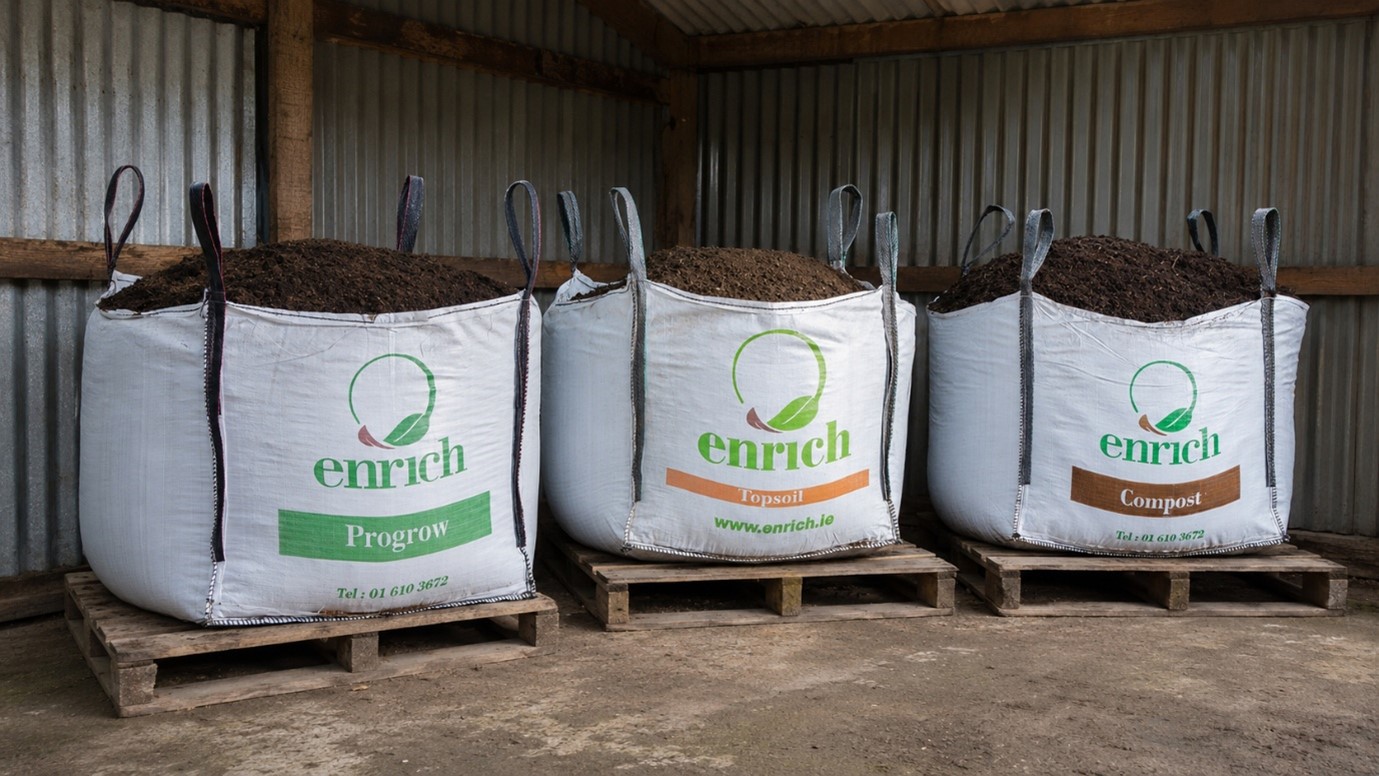
At Enrich, our stockists play an important role in helping customers choose the right soil, compost or mulch for their gardens and landscape projects. Whether a customer is filling a raised bed, improving tired soil, laying a lawn, planting vegetables or simply trying to understand the difference between compost, topsoil and ProGrow, clear advice at the point of sale makes a real difference.
This guide has been prepared to support our stockists with practical product information, storage advice and useful guidance that can be shared with customers throughout the year, particularly over the winter months when correct storage becomes especially important.
Understanding the Enrich Product Range
For stockists, one of the most useful ways to explain the range is to keep the product differences simple.
Enrich Organic Compost is a soil improver. It is made from recycled green materials and is designed to improve the biological, chemical and physical characteristics of soil. It can be used to enrich garden beds, support no-dig gardening, improve soil structure, retain moisture and provide slow-release nutrients. The catalogue lists Enrich Organic Compost as peat-free and certified organic, quality assured to I.S. 441, EPA and Irish Organic Association standards, and suitable for improving soil health and supporting beneficial microbes.
Enrich Topsoil is a blended topsoil product, enriched with organic, peat-free compost. It is designed for general landscaping applications such as laying new lawns, topping up flower beds and improving garden areas. The catalogue notes that it is quality assured to I.S. 441 and BS 3882:2015, screened for a consistent texture and suitable for planting, landscaping and improving soil structure.
Enrich ProGrow is a ready-to-use planting blend. It contains screened topsoil, Enrich Compost, horticultural sand and grit. This makes it particularly useful where customers want a more complete growing medium for raised beds, vegetables, flower gardens or new lawns. The sand and grit support drainage and aeration, while the compost contributes organic matter and fertility.
Bark Mulch products provide a decorative and protective surface layer for flower beds, tree pits and shrub beds. The catalogue lists Fine Bark Mulch at 15 mm and Mini-Chip Bark at 30 mm, with benefits including reduced watering needs, weed suppression, temperature regulation and gradual organic matter contribution as the bark breaks down.
Helping Customers Choose the Right Product
Customers often ask for “soil” or “compost” without knowing exactly what they need. A few simple questions can help guide them to the right product.
Ask what the customer is doing. Are they filling a raised bed, planting shrubs, improving poor soil, laying a lawn, topping up a bed, mulching, or dressing an existing lawn?
If they are improving existing soil, Enrich Organic Compost is usually the right recommendation. It is not intended to replace soil completely, but it is excellent for building organic matter, supporting soil biology and improving long-term soil condition.
If they are building up levels, preparing a lawn area or creating a general planting area, Enrich Topsoil may be more appropriate. It gives structure and volume while also containing compost for added fertility.
If they want something ready for planting, particularly for raised beds, vegetables or flower beds, ProGrow is often the strongest recommendation. It provides a balanced mix of topsoil, compost, sand and grit, giving customers both structure and fertility in one product.
If they are improving a lawn surface, filling hollows or overseeding, Enrich Topdressing should be considered. If they are finishing beds or tree pits and want moisture retention and weed suppression, bark mulch is a better option.
Storage: Why It Matters
Storage is one of the most important areas for stockists to manage. Soil and compost products are living, natural materials. They respond to moisture, pressure and temperature. If bags are left exposed to heavy rain, frost and repeated wetting and drying, product quality can suffer.
Topsoil and ProGrow in particular can lose their ideal texture if stored poorly. When bags take in too much moisture, the material can become heavy, compacted and harder for customers to work with. If bulk bags are stacked on top of one another, the pressure can further compact the material inside the lower bags. This can affect the loose, workable structure that customers expect when opening the bag.
Moisture also changes how soil handles. A product that should be friable and easy to spread can become dense, sticky or clumped if it has been stored in wet conditions for too long. This does not necessarily mean the product has lost its nutrient value, but it can affect the customer experience and make the material harder to use.
Practical Storage Guidance for Stockists
To keep Enrich Topsoil and ProGrow in the best possible condition for spring sales, stockists should store bags in a way that protects them from excess moisture and compaction.
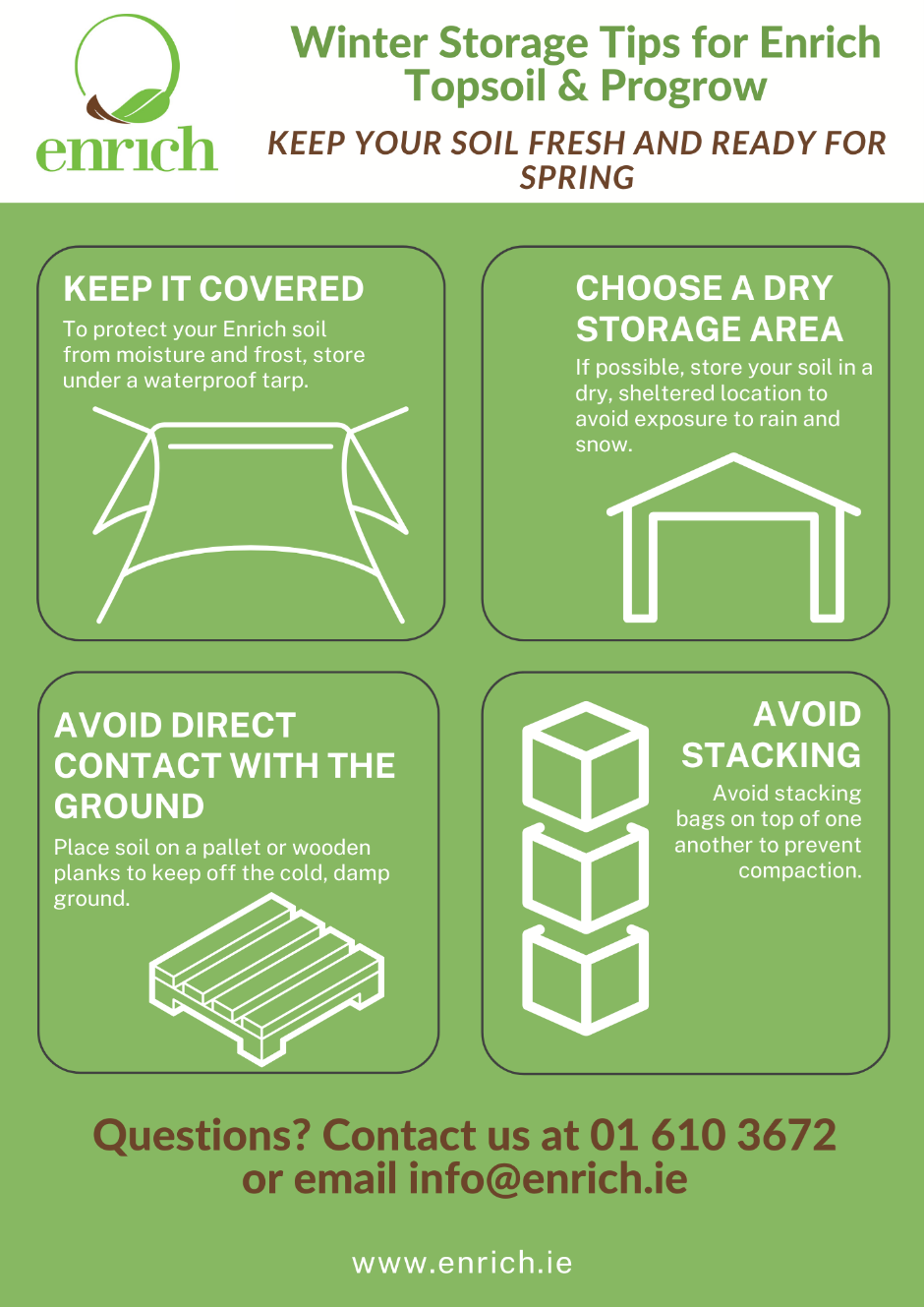
Keep bags covered where possible. A waterproof tarp or covered storage bay will help protect bags from rain, frost and snow. The cover should prevent water sitting directly on the bag surface, but the storage area should still allow reasonable ventilation.
Choose a dry, sheltered storage location. Avoid placing bags in exposed areas where they will receive constant rainfall or where water runs across the yard surface.
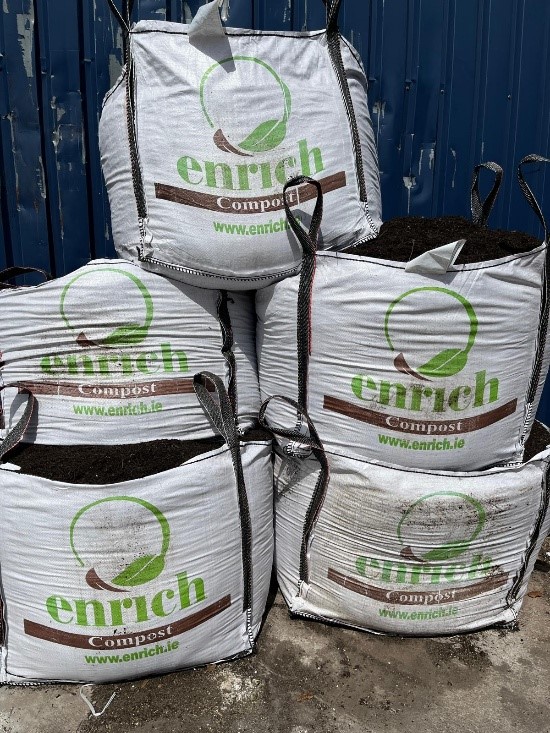
Keep bags off the ground. Place bulk bags on pallets, timber bearers or a clean, drained hardstanding area. This helps reduce contact with cold, damp ground and prevents water gathering beneath the bags.
Avoid stacking bags. Stacking can compact the material, particularly in the lower bags. For soil products such as Topsoil and ProGrow, maintaining structure is important for workability, drainage and customer satisfaction.
Rotate stock where possible. Older stock should be sold first, particularly where bags have been stored outdoors. This helps keep material moving and reduces the risk of long-term weather exposure.
Useful Customer Information to Keep Available
Stockists can improve sales and customer confidence by keeping a few key pieces of information close to hand.
The Enrich product catalogue is a useful reference for product descriptions, applications and key characteristics. It includes the main landscaping products as well as specialist mixes such as bioretention soils, green roof substrates, wildflower mixes, structured tree soil and urban tree sand.
Customers looking for their nearest stockist can be directed to the Enrich website at enrich.ie/where-to-buy. This is also shown in the catalogue as the place to find the nearest Enrich stockist.
Customers can also use the website to view products and estimate quantities for projects. Quantity estimation is particularly useful because many customers underestimate how much soil they need. The basic calculation is simple: length multiplied by width multiplied by depth gives the volume required in cubic metres. For example, a raised bed that is 2 metres long, 1 metre wide and 0.3 metres deep needs 0.6 cubic metres of material.
Having this conversation before purchase helps customers buy the right amount, reduces return queries and improves the overall experience.
Working Together for Better Results
Good product advice and good storage both protect the customer experience. When a customer receives a bag that is fresh, workable and suited to the job, they are more likely to get good results and return for future projects.
